


Generative Motion: The Future of Dynamic Video
Video generation is the new frontier of digital alchemy. We are moving beyond the era of static pixels into a world where high-fidelity cinematic content can be conjured from pure thought. This shift is not just a technological upgrade; it is a fundamental democratization of the film and animation industries.
The Leap to Natively Generated Motion:
• From Frames to Flows: Early AI video models struggled with temporal consistency, but the new generation of models, such as Google's Veo, understands the physics of movement. This allows for fluid, realistic motion that mimics high-end cinematography.
• Director-Level Control: Creators can now use natural language to direct scenes, specifying camera angles, lighting conditions, and even the "materiality" of objects within a fluid, dynamic space.
• Real-Time Iteration: The traditional pipeline of rendering and post-production is being compressed. What once took weeks of simulation can now be visualized and refined in hours.
Key Implications for Creators:
1. Hyper-Personalized Content: Imagine advertisements or cinematic experiences that adapt their visual flow in real-time based on the viewer's preferences.
2. Boundless Visual Effects: Independent creators can now access visual effects (VFX) that were previously reserved for big-budget Hollywood studios.
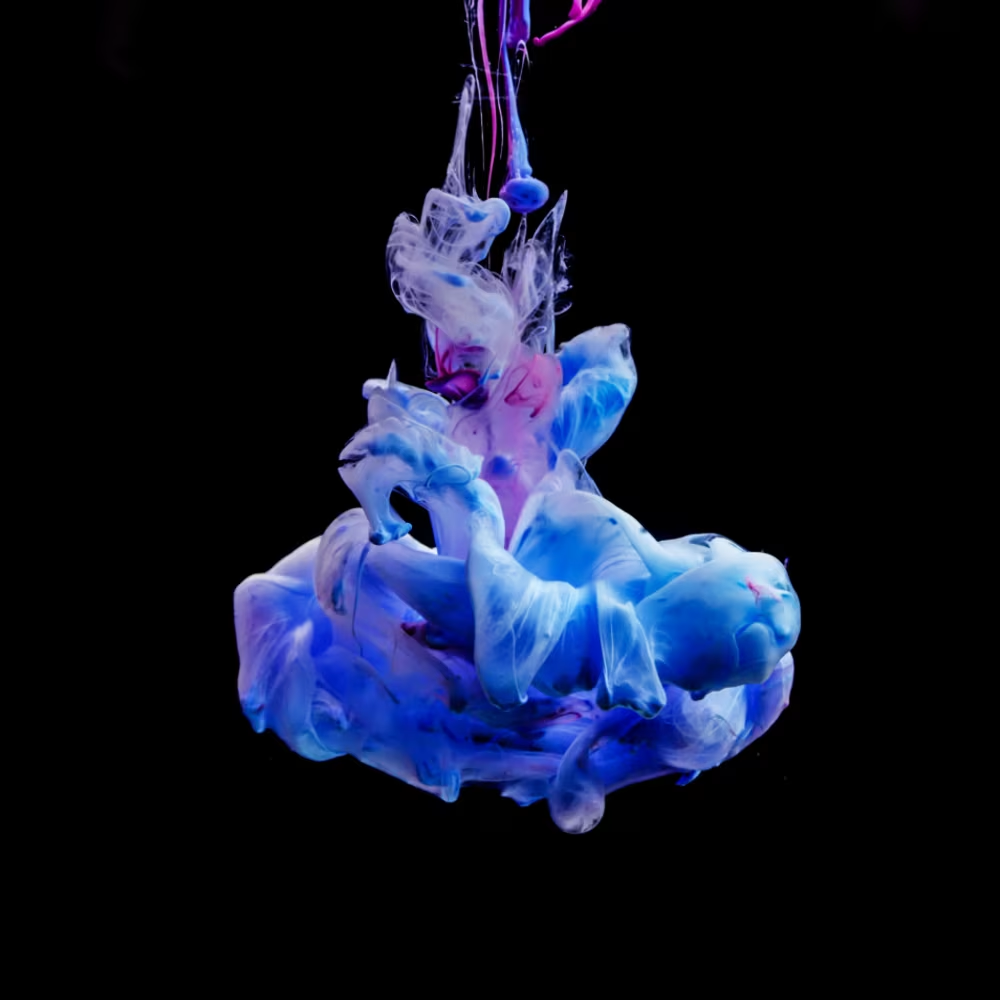
3. New Aesthetic Languages: Generative motion allows for "impossible" visuals—abstract liquid flows, glowing neon blue architectures, and dream-like transitions that defy the laws of physics.
"In the world of Generative Motion, the word is the camera, and the algorithm is the light. We are no longer capturing reality; we are calculating dreams."
As we integrate these models into our workflow, the focus shifts from the technical "how" to the visionary "why." The future of video belongs to those who can master the dialogue between artistic intent and algorithmic
